Showing posts with label banned books week. Show all posts

Saturday, October 1, 2011

Banned Books Week Day 8: Banned Books Save

Last day of Banned Books week!

I love Banned Books Week, and I'm so grateful for all the people who support Banned Books this week and all year round.  I just wanted to end it with some parting thoughts.

This year has been a big one for YA books.  8 of the 10 most frequently banned books in 2010 could be considered Young Adult literature.  The previously mentioned Meghan Cox Gurdon article has created a great deal of controversy by basically vilifying the whole genre.  Then there was the 100 Young Adult Novels for the Feminist Reader list put out by Bitch Magazine that started to pull titles, all but supporting their censorship.  (A roundup of the full controversy can be found here.)

It's also been a hard few years for teens, not as though the teen years aren't always hard.  There have been a shocking number of suicides brought on my bullying and cyberbullying incidents; one of the most high profile ones occurred in my own St. Louis where the bully was actually the mother of a rival student.

Most disturbing about banned books is that it seems that time and again we are taking books away from kids that they most need.  I've mentioned The Chocolate War by Robert Cormier a couple of times this week for a  reason.  I read it last year for Banned Books week and was blown away.  It's such a poignant statement about mob mentality and school bullying.  I can see why educators wanted to have their students read this book in a school setting, so they can understand that bullying isn't new, that they're not alone, and it's always senseless.  But, because of a few cuss words, some teen boys ogling women, and a masturbation scene, it has been banned time and time again.  Is it more important to protect our teens from knowledge of sexism, cussing, and masturbation than it is to let them see the pointlessness of bullying and that no matter how bad it gets, there's always a way out?


When the #YASaves campaign really hit Twitter in earnest, there was story after story of teens who weren't damaged by books, but inspired and helped by books.  A lot of those books were some of the "Dark" YA literature that Gurdon talks about.  A lot of them are banned books.

What I urge people to remember after this Banned Books week is "I don't want my child to read this" does not equal "no child should read this."  A ban withholds a book from a whole population of people, and that book just might have been the book a child or teen needed to save them.

Friday, September 30, 2011

Banned Books Week Day 7: These Books Were Born this Way

Take a look at this Chart from the ALA:


The 7th most common reason a book is challenged by the ALA is because it includes Homosexuality.  Not necessarily that it contains explicit homosexual sex, but just that the idea of homosexuality exists in the story.  The children's book And Tango Makes Three, by Peter Parnell and Justin Richardson has made the top Ten Most Challenged books list from 2006-2010, and for 4 of those 5 years, it was the #1 most banned book in the country (It slipped to #2 in 2009).  Keep in mind that this book is banned for homosexuality and the word "homosexual" doesn't occur in it.  


I was cavalier about books that included the occult in this blog post and it's actually more often a reason books are challenged, so why get up in arms about this?  After all, isn't homosexuality just another issue where some of us are just never going to see eye to eye?

Here's the difference.  Animals don't talk.  Broomsticks don't fly.  Vampires, sparkly or otherwise, do not exist.  Also, Banning Harry Potter and Twilight hasn't done much at all to stem their popularity, and I challenge you to find a library with picture books that don't have animals talking.

When someone bans a book that just even mentions the idea of homosexuality, they are trying to banish the idea that homosexuality even exists in this world.

While the fantasy, vampire, magical genres are going well and good in publishing, books that include homosexual characters all ready have an uphill climb.  People who ban books have failed to stem the popularity of Harry Potter, but banning a book with homosexuality in it can doom the book to obscurity or take the book out of the hands of someone who needs it most.

Someone who needs to know that they are not alone.

Someone who is trying to make sense of themselves in a world that is constantly telling them they are wrong just for being born who they are.

Support these books.  Put them in the hands of kids, teens, and adults who need them.  Help give a voice to a group of people who have been too long treated like they were second-class citizens and told that their very existence is wrong.


Thursday, September 29, 2011

Banned Books Week Day 6: Can a book turn you EVIL?

When you think of a banned book, what do you think of?

Is it one banned for being sexually explicit? Violent? Full of questionable language? Anti-government/democracy/authority?

Or do you think of Harry Potter and Twilight?

I think we notice books that are banned for including the "occult" or "religious reasons" a bit more than others.  Perhaps it is because its harder to defend books full of violence, swearing, or racism wholeheartedly.  In the long run, we don't want our children to be violent, swearing, or racist.  While most of the books we like to stand up for on during Banned Books week are truly wonderful; we know there is bad stuff out there.  Pornagraphic violence.  Just plain pornography.  Hurtful, awful propaganda.  Harder to stand up for that stuff, isn't it?

It's not hard to stand up for Harry Potter if you're not afraid of witchcraft.  If you are afraid of witchcraft, then the work is insufferable.  This is a subject that is very US (we free-speech loving bookish types) versus THEM (those people, the kind that don't like witches and try to ban books with them.)

I'm not going to convince any of "them" as much as I'd like to.  People who would ban Twilight don't care that Stephanie Meyer is a devout Mormon and that the themes of that book are based on monogamy and marriage more than demon worship.  People who would ban Harry Potter hear the word "witchcraft" and don't really care to hear the rest, that the books are religiously neutral.  That JK Rowlings considers herself a (struggling) Christian.

You'd never know it from the press it gets, but over the last decade, books banned because of "religious viewpoint" and "occult" content equal about a third of the books that were challenged for being "sexually explicit."  It's not that I'm saying that we shouldn't protect these books or all books for that matter.  I just think this issue is a banner issue (pun not intended) for we Banned Books Week enthusiasts because its easy for most of us to defend these books.  We like to step into magical worlds, we see that these are fantasies and we're not threatened by them at all.  Get on your high horse about other issues like sex, violence, drugs, and racism and someone can show you a truly awful book that you won't want to defend.


That's the problem with free speech, we have to let everyone have it.  Even the racists, the sexists, the pornographers, and even the people who think that animals talking in Charlotte's Web is a perversion of God's domain.


On the plus side, its because of free speech that they can't take our talking animals and broomsticks and vampires away from us.  A parent who wants to keep a book out of their child's hand can't do it by taking a book out of another child's hands.  You can't interfere with my free speech because you think yours is better or more important.


So you leave my talking animals alone and I'll defend your book's right to be there too, and we'll both be miserable about it.  God Bless America!


Check out some of these truly evil, occultist books this Banned Books Week.


Wednesday, September 28, 2011

Banned Books Week Day 5: What harm can a book do?

People say we're a more violent culture than we used to be.  Thinking like this tends to tick me off.  I don't remember attending a crucifixion lately, or watching Christians be fed to the lions, dropping my imperfect Spartan baby off a cliff, or drawing and quartering someone, so on, so on, so on.  Since the first caveman clubbed another one, humanity has been violent.   Hell, the world is pretty violent.  Baby sharks eat each other in the womb.  Have you ever watched that Meerkat Manor show?  They're like crime bosses.  So much for "nature is innocent."  


Let's not waste a lot of time here pretending that this is the generation that is going to destroy us all, because Socrates thought the youngsters of his time were going to destroy the world and we've had a pretty good run since then.


I'd be shocked if you haven't read this article by Meghan Cox Gurdon by now.
Cox Gurdon believes the YA has become too dark and that this newest generation is going to go to hell because they're reading about sparkly vampires instead of Nancy Drew.  According to her, YA is all "vampires and suicide and self-mutilation" and this is going to seriously psychologically impact our children.  We bookish types, especially those of us in YA, got up in arms about it and took to the internet to tear it apart.  There are a million good responses to it, like this one from Bookshelves of Doom.  This article is really maddening and I think the YA community has (rightly) said their piece on it, and the only reason that I'm bringing it up is that it seems to me a call to ban books.


Violence in a book is rarely used to advocate violence.  It's used to show struggle, evil, pain in the characters, and by doing that, show pain in this world.  The Hunger Games by Suzanne Collins was banned this year.  The complainant had this to say:


“Twenty-four children are pitted in a life-or-death struggle with each other. The reason? Entertainment. That’s sick.  You guys don’t want Columbine, but you’re putting forth material that will totally desensitize the children to murdering other children.”
“What does that teach as far as honor?  What does that teach as far as ethics? Where is the moral lesson in this book that’s being shown to our children?”
For myself, I always took the moral of The Hunger Games to be Not to kill children.  That vanity, lack of education, and sensationalism will put a society on the path to become monsters, like those in the Capital.  Collins completely agrees with the complainant: children killing children for entertainment IS sick.  Every teen I know who has read The Hunger Games reached the same conclusion without needing it spelled out for him like an After-school special.  You don't get engrossed in a book, in a character you love, like Rue or Katniss, and come away from the story believing it was right to have done to them what happened in that book.  Here is another example of criticizing the content without the context, and underestimating our youth as you do so.


As always, parents should be reading what they're children are reading, making sure that their children are able to process what they're reading or seeing on television.  We'd like to give our children with a world less awful than the one we lived in but we just simply can't.  There are acts we perpetrate against our fellow man that are too horrible for me to understand as an adult and we can only hide them from our children for so long.  A story gives words, emotions, and life to a victim who might be just a name and a face on the news.  
I'm not an advocate for violence, but these banned books, with characters who are victims of violence, aren't either.


Check out Sheila from Book Journey's review on this "violent" banned classic and enter her Banned Books Week Giveaway: Here


Tuesday, September 27, 2011

Banned Books Week Day 4: @#$%ing Banned Books


According to ALA, the second most common reason a book is banned, after being “sexually explicit,” is offensive language.


It’s hard to defend cussing and racial slurs.  I’ve heard it said that profanity is used because of a laziness with language, and I agree.  I tend to cuss most when I’m tired, which makes me believe this all the more to be true.  For every time you use a cuss word, there are probably ten better ways to say something, but who has the energy, right?


Don’t take this to mean that I’m a goody-two-shoes about profanity, just that it’s not a terribly savory thing to stand up for.  Racial slurs are certainly even more difficult to defend.


Still, just because I would prefer not to use a word on a day to day basis, doesn’t mean a character in a book wouldn’t.  Profanity happens in YA a lot because Teenagers like to cuss.  What better way to prove you’re an adult (which teens are desperate to do) than to use “adult language”?

In some situations, using profanity is almost a survival technique.  “Why do you talk like that?  You think you’re ****ing better than us?”  Sometimes, its just all about the kind of character you’re reading about.  Sometimes a character just swears like a sailor.


By protecting kids from words, we're not just giving those words power, but we're also depriving them of stories about characters who might just be going through what they're going through. The teen years are hard and books have time and again helped kids see that they're not alone. Just read the #YASaves thread on twitter. Why throw away the story over a few words within it? Why not trust in parenting, schools, and society that they'll eventually learn not to use cuss words at certain times and a book isn't going to change that?


Actually, bans on books with racial slurs are more upsetting.  No one denies the words are hurtful and awful, but is the way to combat racism to ignore that it ever happened?


Banning To Kill a Mockingbird by Harper Lee and The Adventures of Huckleberry Finn by Mark Twain for their use of racial slurs is the epitome of “not getting it.”  Mockingbird is one of the most powerful indictments of our culture; and is firmly against racism.  This is not some hidden meaning in the book, anyone who has read it knows it immediately. To call it racist, to ban our children from learning its story, is a far greater crime than its use of the “n-word.”  Are we expecting our children to believe that racists who unfairly lynched a man would not use this word?


Earlier this year, NewSouth Books released a version of Huckleberry Finn that replaced all instances of the “n-word” with “slave.”  This was done with the best of intentions.  The scholar and publisher behind this book wanted more readers to experience the literature of Mark Twain, but its so frequently banned that they hoped this version would make its way into the hands of more children.  But what can be gained, really, by sweeping this part of our history, dark as it is, under the rug?  How can we ever hope to grow past it if our children never see that there was something wrong?


So &^@% it.  Celebrate your @#$%ing right to read and read one of these @#$%ing Banned Books today!


Monday, September 26, 2011

Banned Books Week Day 3: Damn the Man! Anti-Authority Kidlit

Can a book start a revolution?

Definitely.

Books can be powerful, moving, and inspiring.  Books are meant to make you question and think.

Today for banned books week, we look at books have been removed or challenged because some believe they encourage disrespect of authority.  Viva la Revolucion!

Captain Underpants by Dav Pilkey


I am quite afraid that children will hypnotize their principal into thinking he’s an underpants wearing superhero.

Brown Bear, Brown Bear, What Do you See? By Bill Martin, Jr.


Banned because another Bill Martin wrote a book on Marxism.  It actually wasn’t the same Bill Martin, but what does that matter.  Brown Bear is rife with Marxist propaganda, what with all of his…seeing things.

James and the Giant Peach by Roald Dahl


I do hope that our children don’t run away from home in a Giant Peach inhabited with magic insects.

Sylvester and the Magic Pebble by William Steig


Banned because it shows anthropomorphic pigs as cops.  Pigs have other careers in the book but-okay, this one is a little funny.  I think it’s more cause for Mr. Steig to get speeding tickets for the rest of his life than a reason to be banned.

A Light in the Attic by Shel Silverstein


Banned because it the poem, “How Not to Have to Dry Dishes” encourages children to smash dishes instead of dry them.  I imagine if we had a rash of those there would be an answer poem: “How to Insure You’ll be Grounded until College.”

In all seriousness, I have worked for a school where Captain Underpants was banned.  It was one of the most popular books for our struggling readers and it was taken out of their hands because the main characters were "not nice."  Books that kids desperately wanted to read were taken from them because of overblown fears, possibly turning a child away from reading in general.

I think we underestimate our kids when we think books like this are going to make them turn against us.  I also think we might be taking ourselves a little too seriously as “authorities.”


Sunday, September 25, 2011

Banned Books Week Day 2: Can a book make you have sex?

Some books Banned for being Sexually Explicit:


Merriam-Webster Dictionary – Banned for defining oral sex in Southern California in 2010.
 -A definition cannot be called “glorifying” sex, so here is an example of trying to squash knowledge of the act itself.  Will knowing of something’s existence alone make you want to do it? 


The Hunger Games by Suzanne Collins – Banned for its violence, which I’ll discuss later, but also its sexual content.  Does anyone who read this remember any sex in this book?  Finnick later mentions his sexual exploits in “Mockingjay,” but those aren’t even gone into explicit detail.  This one is a real head scratcher for me.


Absolutely True Diary of a Part-time Indian by Sherman Alexie and The Chocolate War by Robert Cormier – Both banned for scenes containing masturbation.  I’ve never read a masturbation scene in literature that has “glorified” it.  I know that there are some who believe that masturbation is a horrible crime.  I disagree and am apt to believe that everyone tries it whether they read a book about it or not, or even know the word for it.


What’s Happening to My Body?  Book for Boys: A Growing-up Guide for Parents & Sons by Lynda Madaras and Dane Saavedra – How dare a book about sexual changes in boys define sex?  Next thing they’ll do is put the term “oral sex” in the dictionary.  Actually, the objectionable passages were the definitions of “rape,” “incest,” and “sexual assault.”  I really hope that parents don’t believe that just the knowledge of these words will make their children try it.  I also hope they don’t believe that by pretending that these things do not exist will make them disappear.


Crank by Ellen Hopkins – Banned for several reasons including it’s sexually explicit material, which in the case of this book is a rape.  Again, I should hope that parents don’t believe that the very knowledge of the existence of rape is dangerous.  Maybe you don’t what your child to know the darker parts of the world.  Problem is, part of passing into adulthood is learning about these things, and a book very well might be the safest way.  Would you rather they learned it from a movie or, God forbid, the internet?

I understand the desire to protect young people from adult topics; to keep the veil of childhood on a bit longer.  I’m an advocate of parents reading what their children read and helping them come to terms with it.  When books like this are banned from curriculum in schools, children and teens are denied the chance to work through these issues with their peers and a teacher.  And what about the kids who already know about sex and are trying to figure out their feelings on it.  As Sherman Alexie said about his childhood:

They wanted to protect me from sex when I had already been raped. They wanted to protect me from evil though a future serial killer had already abused me. They wanted me to profess my love for God without considering that I was the child and grandchild of men and women who’d been sexually and physically abused by generations of clergy.”

Saturday, September 24, 2011

Banned Books Week Day One: Why Celebrate?

It’s Banned Books Week!


When I celebrated Banned Books Week in my library last year, a lot of patrons were confused?

“Are you celebrating banning books?”

“No, we’re celebrating the fact that we have the freedom to read banned books.”

*Confused look*

“Why is that important?

Why indeed?  I think a couple things were confusing to that patron that day.  To begin with, when one hears the word “banned” it calls up an image of legitimacy.  If something is banned, it must be bad, so why read it?  Instead, banning happens to some of the greatest books that have ever been written.  It is not done with anymore authority than one person or a small group of people’s entitled opinions.

Additionally, the word “ban” seems to indicate legality.  Actually, the letter of the law doesn’t lay with the people who are banning the books, but with the books and ideas within them they’re striking down.

So, why is it important to read celebrate our freedom to read a banned book?

Well, when has ignorance ever been a force for good in this world?

This Banned Books week, I will be discussing the top reasons why books are banned and the books that have been taken out of the hands of readers because of them.  I’m particularly bothered by book banning because the hands these books are ripped out of are typically those of a child.  We shield children from books and ideas to protect them, but what are we actually protecting them from?
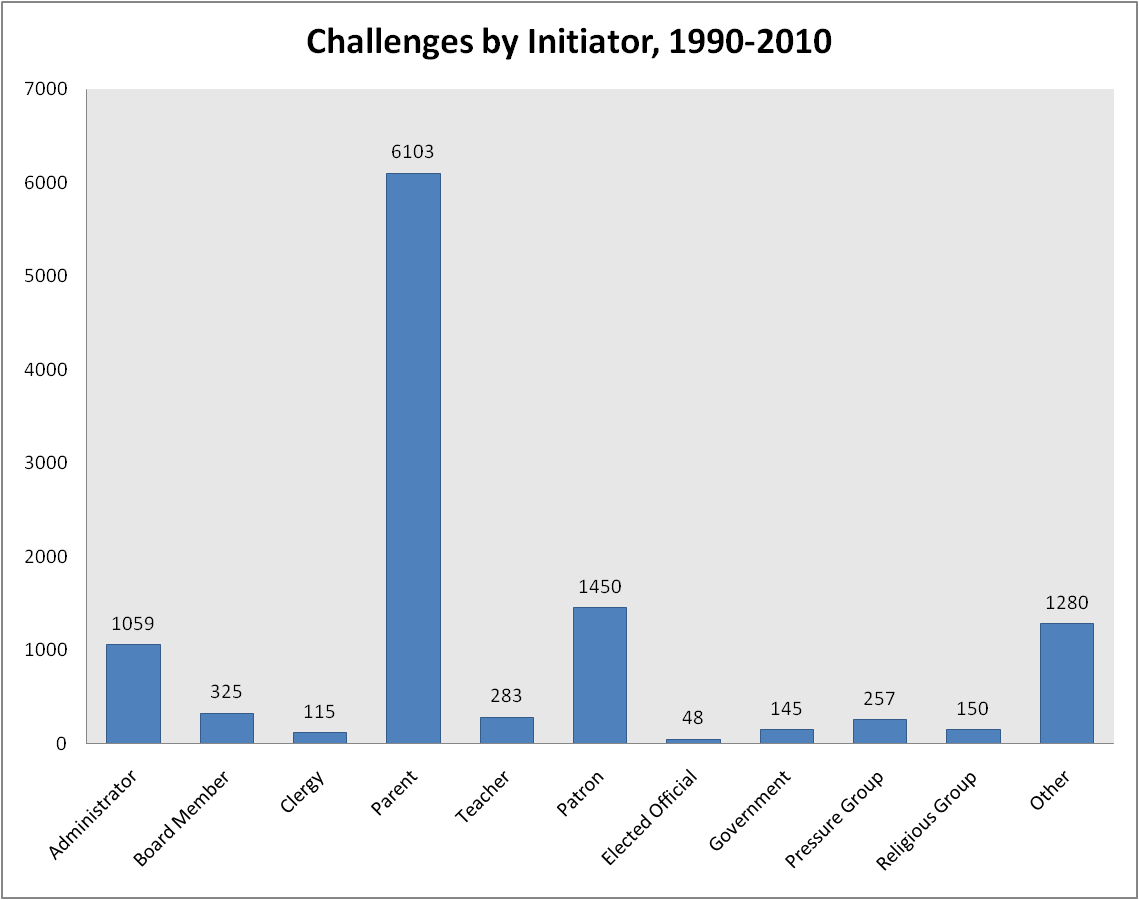
Facts about Banned books:

Books Most Frequently Banned in 2010 as reported by the Office of Intellectual Freedom (Source: ALA.org)
  1. And Tango Makes Three, by Peter Parnell and Justin Richardson 
    Reasons: homosexuality, religious viewpoint, and unsuited to age group
  2. The Absolutely True Diary of a Part-Time Indian, by Sherman Alexie 
    Reasons: offensive language, racism, sex education, sexually explicit, unsuited to age group, and violence
  3. Brave New World, by Aldous Huxley 
    Reasons: insensitivity, offensive language, racism, and sexually explicit
  4. Crank, by Ellen Hopkins 
    Reasons: drugs, offensive language, and sexually explicit
  5. The Hunger Games, by Suzanne Collins 
    Reasons: sexually explicit, unsuited to age group, and violence
  6. Lush, by Natasha Friend 
    Reasons: drugs, offensive language, sexually explicit, and unsuited to age group
  7. What My Mother Doesn't Know, by Sonya Sones 
    Reasons: sexism, sexually explicit, and unsuited to age group
  8. Nickel and Dimed, by Barbara Ehrenreich 
    Reasons: drugs, inaccurate, offensive language, political viewpoint, and religious viewpoint
  9. Revolutionary Voices, edited by Amy Sonnie 
    Reasons:  homosexuality and sexually explicit
  10. Twilight, by Stephenie Meyer 
    Reasons: religious viewpoint and violence

Statistics about Banned Books (Source: ALA.org)